
By Meghan Welch, Director of Paint and Interior Sales, Elliott Aviation
Aircraft interiors live a demanding life. They endure repeated cycles of use, constant exposure to environmental changes, and the natural aging of materials. When an owner begins evaluating the look and feel of their cabin, the first question is often simple. Do I need a full refurbishment, or can I update just a few items and call it good enough?
At Elliott Aviation, we hear this question every week. Whether an owner is preparing for resale, modernizing the cabin for charter operations, or simply trying to refresh the appearance of their aircraft, the idea of a partial interior upgrade can feel attractive. The initial investment is smaller, the scope is narrower, and the downtime may seem shorter.
However, after many years of guiding customers through these decisions, we have seen consistent patterns in how partial upgrades perform over time. Partial refurbishments can make sense in certain situations, but they also create limitations that are not always clear at the beginning. In many cases, these limitations lead to repeated downtime and higher long-term costs than a full refurbishment would have required.
Below are the key considerations every aircraft owner should understand before choosing a partial refresh over a full interior refurbishment.
The Mismatch Effect and Why It Happens
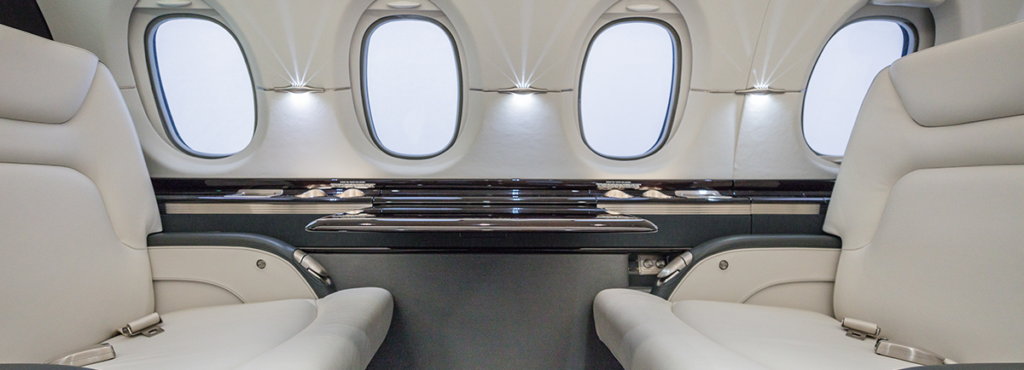
One of the most common scenarios we see begins with a customer looking at specific components and saying something like, “These window panels are still fine,” or “The seats look like an eight out of ten.” They appear serviceable, so replacing them feels unnecessary.
The challenge shows up the moment new materials are installed around these older pieces. What looked like an eight out of ten before suddenly looks outdated next to components that are brand new.
Aircraft interiors are unified environments. Colors, textures, and materials were originally chosen to complement each other. When you upgrade only part of the cabin, small inconsistencies become obvious. This includes the natural fading of colors, worn edges on seats, aging foam structures, older veneers, weakened plating, or any other detail that has evolved.
When these older components sit next to newly refreshed ones, the entire interior begins to look mismatched. Even if each individual part still has life left in it, the contrast reduces the perceived quality of the entire cabin.
For Part 135 operators, this may not be a priority. Their primary focus is durability and functionality. For private owners, however, this mismatch often creates disappointment. They invested in an upgrade, but the aircraft still does not look fully refreshed. This becomes a much larger concern when the aircraft is ultimately prepared for resale.

Resale Value and the Buyer Perception Problem
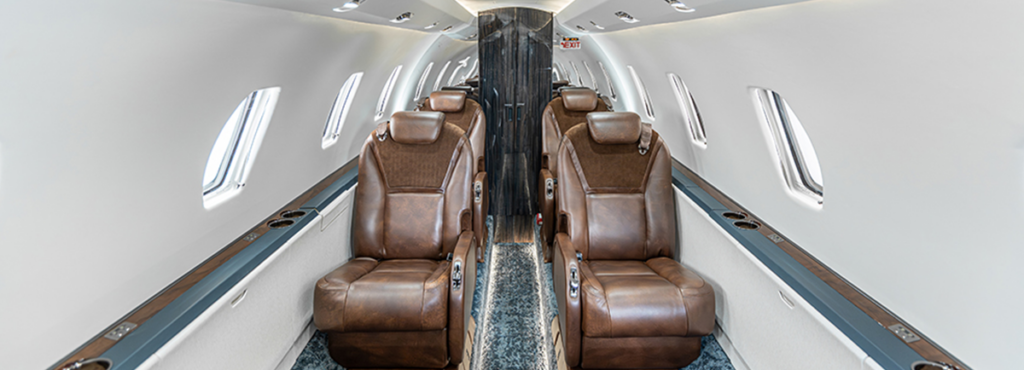
When an aircraft enters the pre-owned market, buyers evaluate it as a whole. A cabin that looks partially updated can raise questions about how the aircraft has been cared for, even if it has been meticulously maintained. Buyers may assume that the owner has deferred maintenance or that additional work will be required to make the interior cohesive.
This reduces perceived value. It can extend the time on market. It also places buyers in a stronger negotiating position.
A full refurbishment, by comparison, presents the aircraft as a truly updated asset. It signals care, completeness, and attention to detail. In competitive listings, a cohesive interior can significantly enhance buyer confidence. Although a full refurbishment requires a larger initial investment, many owners recover that value during resale because the aircraft stands out in both presentation and condition.
Design Limitations That Come With Partial Work
When the entire interior is being refreshed, our design team has complete freedom to create a modern, cohesive, and elegant interior. Materials can be chosen for aesthetics, durability, and long-term value. We can use current color palettes, new textiles, refined veneers, updated plating, and fresh design concepts that bring the entire cabin to a contemporary standard.
Partial interior refurbishments limit this potential. When existing components need to remain, all new materials must be selected to match or closely complement what is already there. Designers cannot introduce certain modern tones or textures because they amplify the age of the older components. Color palettes become narrower. Contrast must be reduced. Creative possibilities become restricted.
The result is a design that feels more like a compromise than a true transformation.
This is one of the most common sources of disappointment for customers who choose a partial upgrade. When they later decide to finish the rest of the interior, they sometimes regret the earlier limitations that constrained the entire project.
Repeated Downtime and the Hidden Cost of Multiple Visits
Downtime is one of the biggest factors owners consider. It is also one of the areas where partial refurbishments unexpectedly add operational burden.
Each time a partial interior upgrade is performed, the aircraft must undergo multiple steps. This includes removal and replacement of components, interior disassembly and reassembly, inspections, testing, detailing, and final checks. These processes happen every time work is done.
If you pursue several partial upgrades over the life of the aircraft, the downtime accumulates. What initially seemed like a time-saving choice ends up resulting in more total downtime than a full refurbishment would have required.
This stop-and-start pattern also disrupts fleet scheduling and personal travel plans, which is especially challenging for corporate operators or owners who rely heavily on their aircraft.
Labor Inefficiency and the Cost of Repeated R and R
Interior components are interconnected in ways that owners may not see. Seats, sidewalls, cabinetry, lighting assemblies, and carpet often require shared removal processes. When upgrades happen piecemeal, technicians must repeatedly remove and reinstall components that were already disturbed during earlier partial work.
This increases labor hours and introduces additional risk, because delicate interior components must be handled multiple times. It also forces technicians to work around recently updated materials, which adds complexity and time.
In many cases, the cumulative cost of several partial refurbishments ends up higher than the cost of a single comprehensive refurbishment.
This is why customers often use the phrase that they feel like they are always chasing the interior. They are never truly done. They are simply moving from one update to the next.
Financial Advantages of a Complete Refurbishment
Many owners are surprised when they learn how much financial efficiency is available when they choose a full refurbishment. When paint and interior are combined and performed at the same time, customers can take full advantage of bonus depreciation, consolidated billing, and simplified accounting. A comprehensive refurbishment creates one clean, complete project that maximizes tax benefits within the same fiscal year.
We often refer to this as the advantage of the Big Beautiful Bill. Instead of spreading investment across multiple partial projects in multiple years, owners capture the full value of the refurbishment at once.
This is especially beneficial for business aircraft where the tax advantages can significantly offset the upfront cost of the refurbishment itself.
When a Partial Refurbishment Truly Makes Sense
Although full refurbishments provide long-term value, partial updates are still appropriate in certain situations. These include:
- Preparation for short-term resale
- Updating the most worn component in an otherwise fresh cabin
- Meeting the needs of a Part 135 operator who prioritizes utility over aesthetics
- Correcting specific problem areas without changing the overall design
In these cases, a partial upgrade can be a good fit. Expectations simply need to be aligned with the outcome.
Final Thoughts
Partial interior refurbishments can be appealing as a short-term solution. They can address immediate cosmetic concerns with a smaller investment and quicker turnaround. However, they also bring limitations related to aesthetics, resale value, design freedom, downtime, and long-term cost.
A full interior refurbishment, by contrast, provides a cohesive, modern, complete update. It improves long term value, streamlines downtime, enhances resale potential, and allows owners to take advantage of significant financial benefits.
Our goal at Elliott Aviation is to help each customer make the decision that best supports the way they operate and the way they plan to use their aircraft over time. With thoughtful planning and clear expectations, we can help you achieve an interior that elevates both your experience and the value of your aircraft.