

The Bombardier Challenger 300 has earned a reputation as one of the most successful super-midsize business jets ever produced. Its combination of performance, reliability, range, and cabin comfort has made it a favorite among corporate operators, charter providers, and private owners. However, maintaining that reliability requires more than routine inspections and scheduled servicing.
Over the life of the aircraft, a series of major maintenance milestones help ensure the Challenger 300 remains safe, reliable, and compliant. Among the most significant are the 48-month, 96-month, and 192-month inspections, along with the event-driven 7,500-landing inspection. Each of these milestones provides a maintenance crew an opportunity to inspect critical structures, evaluate aircraft systems, identify aging-related issues, and address wear before it impacts operations.
Understanding how these inspections differ helps operators better forecast maintenance costs, prepare for downtime, and take advantage of opportunities to combine their major inspections with upgrades and refurbishments.
The Basics of the Challenger 300 Maintenance Program
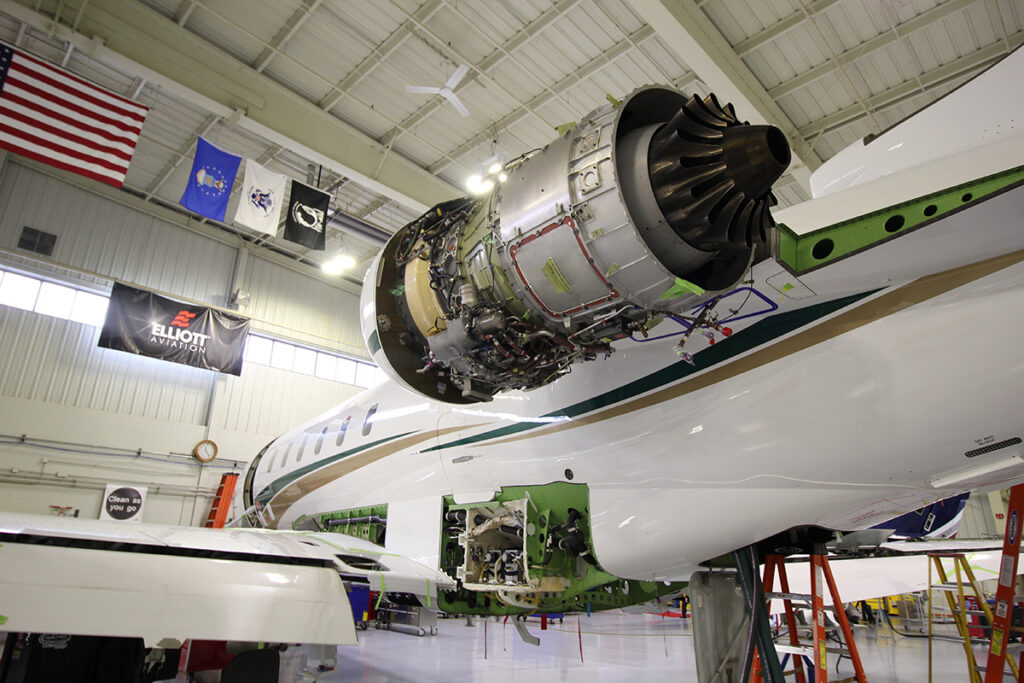
Inspections are scheduled at specific intervals based on calendar time, operating hours, and landing cycles. As the aircraft accumulates age and utilization, inspection requirements increase, which allows technicians to identify fatigue, corrosion, wear, and system degradation before they become operational concerns.
For Challenger 300 operators, the major milestones generally fall into two categories:
- Calendar-based inspections, including the 48-month, 96-month, and 192-month events.
- Landing-cycle inspections, most notably the 7,500-landing inspection.
These milestones are driven by different factors, and the 7,500-landing inspection may not coincide with a major calendar-based inspection.
For example, a charter aircraft that flies multiple short legs each day may reach 7,500 landings well before its 192-month inspection comes due. On the other hand, an aircraft used primarily for longer trips may hit the 192-month milestone first. Keeping an eye on both schedules helps operators plan maintenance more effectively and avoid unexpected downtime.
The 48-Month Inspection: The First Major Airframe Milestone
The 48-month inspection is typically the first major heavy maintenance event encountered by Challenger 300 operators. While the aircraft has already undergone routine inspections throughout its first four years of service, this is the first time technicians gain broad access to many areas of the airframe and systems. Operators generally encounter this inspection at approximately four years or around 4,800 flight hours, depending on utilization.
Opening the Aircraft
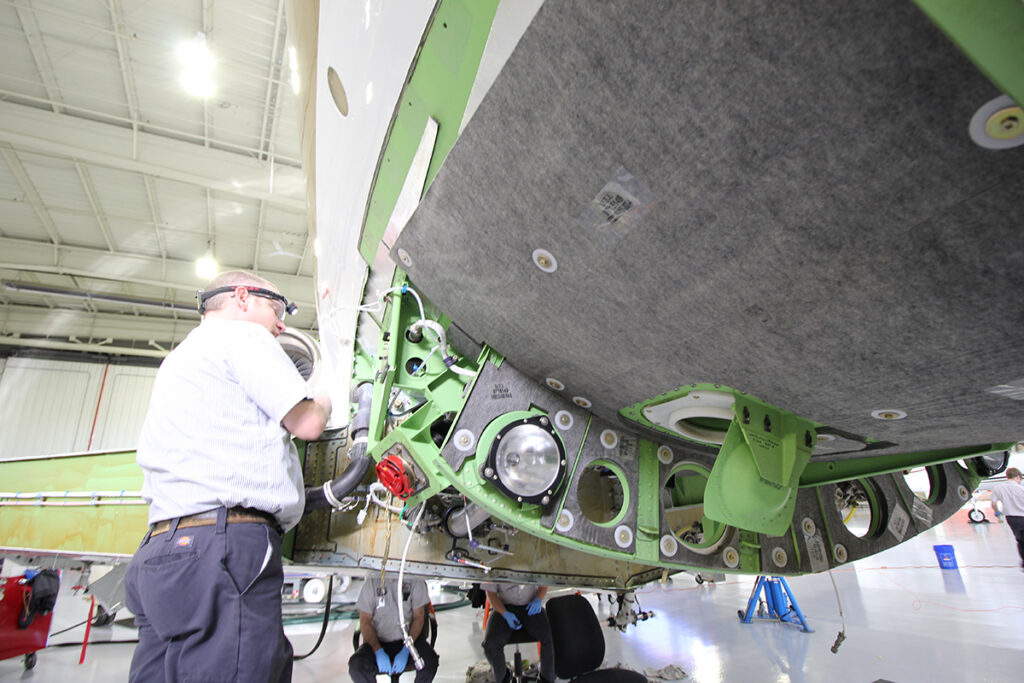
One of the defining characteristics of a 48-month inspection is the amount of aircraft disassembly involved. Technicians remove numerous inspection panels, fairings, access doors, and covers throughout the wings, fuselage, empennage, nacelles, and equipment bays. Areas that are rarely visible during routine maintenance become accessible for evaluation.
This extensive access allows maintenance personnel to establish an important baseline assessment of the aircraft’s condition.
Structural Evaluation
A significant portion of the inspection focuses on the airframe itself.
Maintenance teams evaluate critical structural areas for:
- Corrosion
- Fatigue indications
- Environmental damage
- Fastener condition
- Structural wear
- Previous repair integrity
Particular attention is given to areas exposed to repeated operational loads and environmental conditions that could contribute to long-term deterioration.
Systems Inspections
The 48-month inspection also includes inspection and functional testing of major aircraft systems, including:
- Hydraulic systems
- Electrical systems
- Pressurization systems
- Environmental control systems
- Flight control systems
- Fuel systems
These evaluations help identify emerging issues before they affect dispatch reliability or require unscheduled maintenance.
The 96-Month Inspection: A Significantly Expanded Workscope
By the time a Challenger 300 reaches eight years of service, maintenance requirements expand for an even greater evaluation of the airframe and its systems. The 96-month inspection builds upon the foundation established at 48 months but introduces additional inspection requirements aimed at evaluating an aging aircraft.
This milestone is widely regarded as one of the most important scheduled maintenance events in the aircraft’s lifecycle.
More Advanced Structural Inspections
As aircraft age, maintenance programs increasingly rely on inspection methods capable of detecting issues that may not be visible during standard visual examinations. These tools help technicians identify fatigue damage, cracking, and material defects before they become serious structural concerns.
Depending on the applicable maintenance tasks due, inspections may utilize:
- Eddy current testing
- Ultrasonic inspection techniques
- Fluorescent penetrant inspections
- Other non-destructive testing (NDT) methods
Expanded Access Requirements
Compared to the 48-month event, the 96-month inspection generally requires broader aircraft access and more detailed inspections of critical structural areas. Heavy inspection work at this stage may include additional access to areas that require more extensive disassembly, depending on the specific maintenance tasks that become due at this interval.
Fuel System Inspection Activities
Heavy inspections on the Challenger 300 may include fuel tank access and internal fuel system inspection requirements when applicable maintenance tasks call for them. These inspections can involve evaluating internal structures, fittings, sealants, and components within the fuel system. Because of the preparation and safety requirements associated with fuel system access, these tasks can become some of the more labor-intensive portions of a heavy inspection visit.
The First Major Landing Gear Milestone
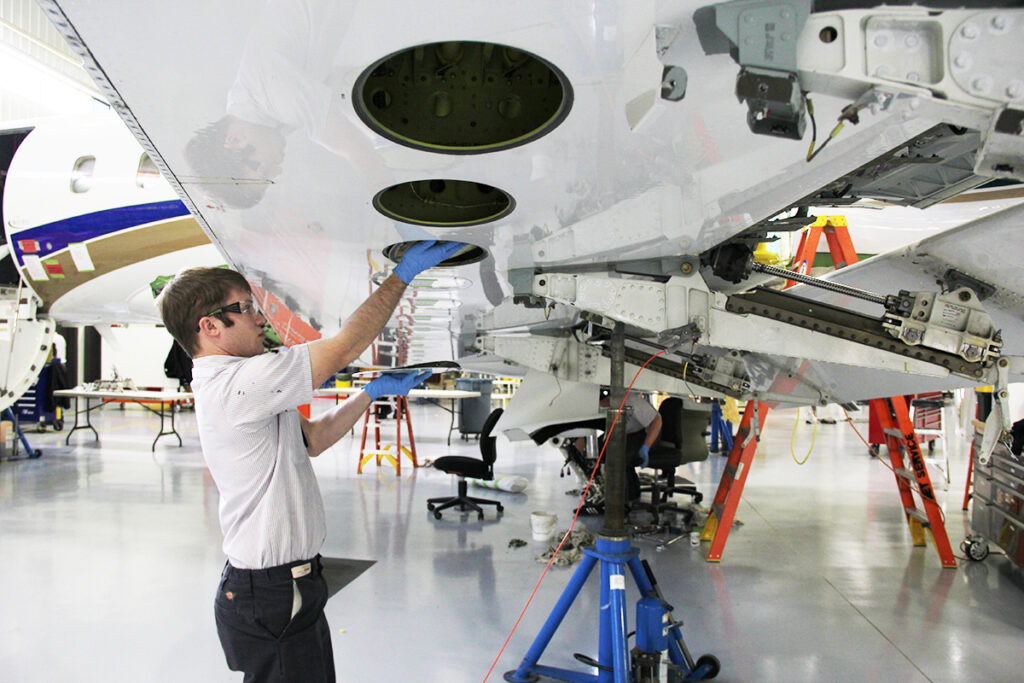
One of the most important differences between the 48-month and 96-month inspections is the landing gear requirement. At 96 months, the Challenger 300 undergoes its first major detailed landing gear inspection. Maintenance personnel focus on high-load components, wear surfaces, corrosion-prone areas, and structural elements throughout the landing gear assembly.
The 192-Month Inspection: The Most Extensive Calendar-Based Inspection
At sixteen years of service, Challenger 300 operators reach the aircraft’s most comprehensive calendar-driven inspection milestone. The 192-month inspection requires extensive planning, broad aircraft access, advanced inspection techniques, and major component evaluations. While it is the most comprehensive calendar-based inspection in the maintenance program, it should not be confused with the separate 7,500-landing inspection (which we’ll address later), which is driven by utilization rather than age.
Extensive Airframe Access
During the 192-month inspection, technicians gain access to virtually every major area of the aircraft. During this inspection, all panels are removed, numerous components are replaced, and extensive structural inspections are performed throughout the airframe. Advanced NDT procedures allow technicians to evaluate how years of operational service have affected the aircraft’s primary structures.
By this point, maintenance personnel are assessing more than a decade and a half of operational history.
Landing Gear Restoration and Overhaul
The single most significant component requirement associated with the 192-month interval is the landing gear restoration or overhaul.
While the 96-month event requires a detailed inspection, the 192-month milestone calls for complete landing gear restoration. The landing gear is disassembled, inspected, evaluated using dimensional and non-destructive testing techniques, repaired as necessary, and returned to approved service standards.
The process typically includes:
- Major disassembly
- Visual inspections
- Dimensional inspections
- Non-destructive testing
- Corrosion evaluation
- Component replacement as required
Given the thousands of takeoff and landing cycles accumulated by this point, the overhaul plays a critical role in ensuring continued reliability and safety.
The 7,500-Landing Inspection: A Utilization-Driven Milestone
While calendar inspections often receive the most attention, the 7,500-landing inspection is one of the largest maintenance milestones in the Challenger 300 maintenance program.
Unlike the 48-, 96-, and 192-month inspections, the 7,500-landing inspection is driven entirely by utilization. Every landing introduces loads into the landing gear, wings, fuselage, and supporting structures. Over thousands of cycles, those repeated loads become a major factor in aircraft maintenance planning.
Why Landing Cycles Matter
Not all Challenger 300s are operated the same way. Utilization patterns can significantly affect when major maintenance events come due. While some aircraft accumulate landings quickly through frequent trips, others generate relatively few cycles despite flying substantial hours. As a result, inspection timing can vary considerably from one aircraft to another, making it important to consider both calendar-based and cycle-based requirements when planning long-term maintenance.
One of the Most Comprehensive Inspections on the Aircraft
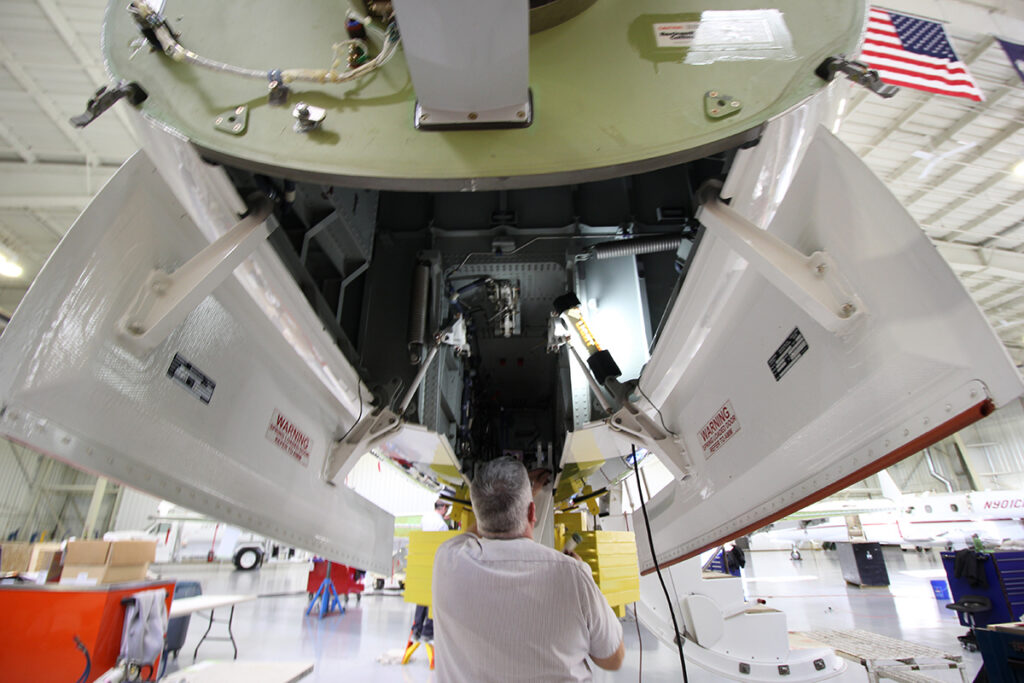
The 7,500-landing inspection is among the most comprehensive inspections conducted on the Challenger 300 platform. The inspection requires extensive planning, specialized tooling, advanced NDT equipment, and significant aircraft disassembly. The inspection requires broad access throughout the airframe and represents one of the most significant maintenance events many operators will encounter.
Technicians inspect areas throughout the aircraft that have experienced thousands of operational load cycles, looking for:
- Fatigue damage
- Structural cracking
- Corrosion
- Excessive wear
- Evidence of deformation
Comparing the Major Challenger 300 Inspection Milestones
48-Month Inspection
- First major heavy maintenance event
- Structural inspections
- Corrosion evaluation
- Systems testing
- Extensive panel access
- Commonly paired with minor upgrades and modifications
96-Month Inspection
- Expanded structural inspections
- Increased NDT requirements
- Additional heavy inspection tasks
- Detailed landing gear inspection
- Broader aircraft access
- Ideal timing for modernization projects
192-Month Inspection
- Most comprehensive calendar-based inspection
- Extensive airframe access
- Deep structural evaluations
- Landing gear restoration/overhaul
- Commonly paired with major refurbishment projects
7,500-Landing Inspection
- Driven by aircraft utilization rather than age
- Focused on cumulative cyclic loading
- Extensive structural evaluations
- Significant NDT activity
- One of the most comprehensive inspections in the maintenance program
- May occur before or after the 192-month inspection depending on utilization
Final Thoughts
The Challenger 300’s major inspection program is designed to evolve with the aircraft throughout its service life. The 48-month inspection establishes the first comprehensive assessment of the aircraft’s condition. The 96-month inspection expands the scope considerably and introduces the first major landing gear milestone. The 7,500-landing inspection addresses the cumulative effects of thousands of operational cycles and has become one of the most significant utilization-driven inspections on the platform. Finally, the 192-month inspection serves as the aircraft’s most extensive calendar-based maintenance event, combining comprehensive airframe evaluations with landing gear restoration and long-term lifecycle management.
For operators, these milestones represent more than scheduled maintenance. They are opportunities to preserve aircraft value, improve reliability, modernize aging systems, and ensure the Challenger 300 continues delivering the performance and dependability that have made it one of business aviation’s most respected aircraft.